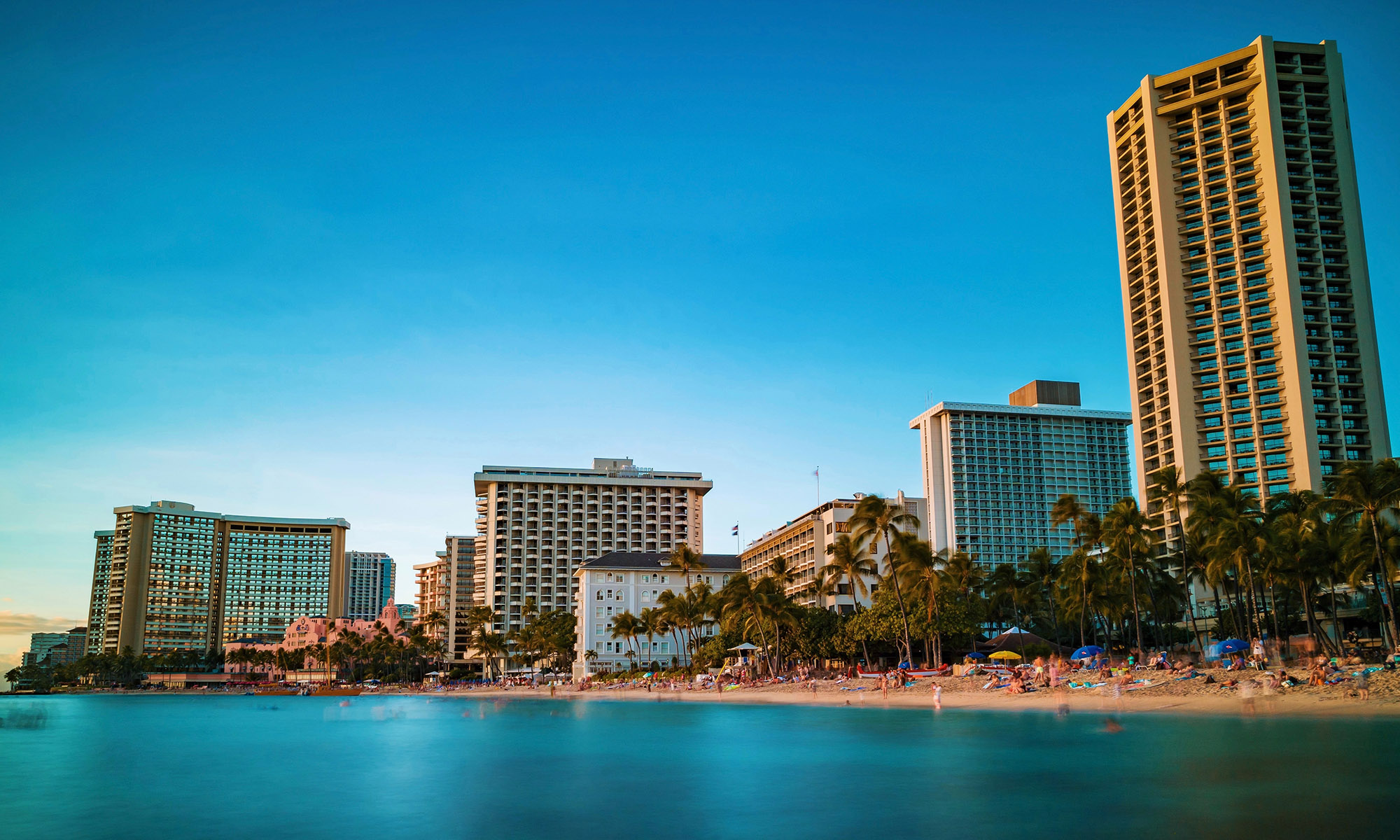
Film tax bill will fuel industry

The Hawaiʻi Film Alliance announced today (May 8) that the state’s landmark film tax incentive legislation has passed the legislature and awaits the Governor’s signature.

SB 2580 is the measure that the film and television communities have been awaiting, since the latest legislation – a tax incentive infrastructure which will enable movie and TV creators to once again aim their cameras to end the drought here – so actors, directors, cinematographers and all the allied craft industries, can soon start shooting again after a decade without prominent filmic action throughout the state.

Gov. Josh Green is expected to sign the legislation, which will green-light future projects and once again stabilize a new generation of  feature films and episodic television fare to fuel the island’s  entertainment industry.

“This bill positions Hawaiʻi to become the premier Pacific hub for global film and streaming production,” said Irish Barber, president of the Hawaiʻi Film Alliance. “More importantly, it creates sustainable local careers so Hawaiʻi’s creative workforce no longer has to leave home to build a future in this industry. This is about investing in our people, our stories, and the long-term future of Hawaiʻi’s creative economy.

The bill passed the full floor vote in both chambers of the Hawaiʻi State Legislature .

The legislation strengthens Hawaiʻi’s ability to compete for major film, television, and streaming productions while prioritizing local workforce development, expanding opportunities for Hawaiʻi businesses, and creating long-term stability for the state’s creative economy.

“This bill positions Hawaiʻi to become the premier Pacific hub for global film and streaming production,” said Irish Barber, President of the Hawaiʻi Film Alliance. “More importantly, it creates sustainable local careers so Hawaiʻi’s creative workforce no longer has to leave home to build a future in this industry. This is about investing in our people, our stories, and the long-term future of Hawaiʻi’s creative economy.”

Among the major provisions included in SB 2580:

  • Base tax credit rates of 22 per cent on Oʻahu and 27 per cent on Neighbor Islands.
  • A 5 per cent local hire uplift for productions meeting the 80 per cent of local hire threshold, bringing effective rates to 27 per cent on Oʻahu and 32 per cent on Neighbor Islands.
  • Inclusion of streaming productions under the incentive program.
  • An increase in the per-production cap to $20 million, with exemptions for productions exceeding $60 million in qualified spending.
  • Expansion of the overall annual program cap to $60 million.
  • Extension of the program sunset to January 1, 2038.
  • Retroactive implementation effective December 31, 2025
  • Reinstatement of third-party CPA audits for accountability and transparency
  • Updates to General Excise Tax treatment for film industry payroll companies to better align with comparable payroll service structures

The inclusion of local hire language in statute represents a milestone achievement for Hawaiʻi’s production workforce and reflects years of advocacy from local crew members, producers, and industry professionals seeking to build a more sustainable in-state industry.

“For years, Hawaiʻi has watched productions come here to begin projects and then leave for other jurisdictions because our incentive structure could not compete with the realities of modern production — especially in the streaming era,” Barber said. “That meant lost jobs, lost opportunities, and local workers being forced to leave Hawaiʻi to continue their careers. SB 2580 changes that trajectory.”

Jason Momoa

Among the recent projects filmed here: Jason Momoa’s “Wrecking Crew,” Disney’s  live-action “Moana,” and Momoa’s “Chief of War” limited shooting here. In the heyday of a tax benefits, episodic CBS procedurals like “Hawaii Five-0” and “Magnum P.I.” were anchored in Hawai‘i” and another CBS legacy series, “NCIS: Hawai‘i,” was launched but could not sustain life in Pearl Harbor and Honolulu, before being pink-slipped.

Jurassic Park

Hawai’i also hosted such major movie blockbusters, for limited shooting but grand reaction upon release. Remember the likes of “Indiana Jones” and “Jurassic Park”?  Perhaps a new generation of these mammoth attractions will beginning shooting here, with the latest tax incentive legislation.

Brian Keaulana

“When audiences around the world see Hawaiʻi on screen, they want to experience these islands for themselves,” said Brian Keaulana, founding member of HFA and the International Cultural Arts Network. “Film and television showcase Hawaiʻi’s beauty, culture, and aloha spirit to a global audience, inspiring visitors to travel here and supporting hotels, restaurants, transportation companies, small businesses, and local communities throughout the state. The impact of this industry reaches far beyond the set.”

Theater fire shuts down ‘Mormon’

A three-alarm fire on the roof of the Eugene O’Neill Theatre Monday  (May 4) night will force the Tony-winning Broadway hit, “The Book of Mormon,” to shut down indefinitely, beginning  tonight (May 5) and tomorrow night (May 6).

Apparently, the building’s fourth floor received substantial damage including a room that is home to lighting equipment and hanging chandeliers.

The blaze, whtich began in an electrical room, caused “substantial damage” to the Eugene O’Neill Theatre, according to David Simms, New York  fire department assistant chief. The cause of the fire remains under investigation.

There were a lot of catwalks and rigging in the theater, making access difficult, but no one was injured. The cause of the blaze still is under investigation and it’s too soon to set a reopening date.

The marquee of the Eugene O’Neill Theatre, home of “The Book of Mormon.”

The Eugene O’Neill Theatre seats 1,108 patrons and “’The Book of Mormon” has been a popular production since its opening in 2011. It has logged more than 5,000 performances so far.

The show had announced a “Magical Mormon Mystery Week,” marking its 15th anniversary with a myriad of returning cast members the week of June 9 to 14.

Promotional marquee, heralding the 15th anniversary of “Mormon.”

There was no immediate word if the celebration will go on as planned, if theater repairs can be done, or whether the special will be canceled.

The theater, at 230 W. 49th St. in Manhattan, opened in 1925 under a different name, and has had a storied past, with such popular shows as “Sweeney Todd,” “Cat on a Hot Tin Roof,” “Sound of Music,” “Grease,” and “Spring Awakening.” At one point, Neil Simon was the theater owner and staged such hits as “The Odd Couple” and “California Suite.”

Ticket holders will be notified by point of purchase, for refunds or exchanges.

Fleeting memories, with isle icons

Two icons of Hawaii mele and ‘olelo – Robert Cazimero of Oahu and Keali‘i Reichel of Maui – convened in a rare Lei Day concert last night (May 1) ‘neath the huge white tent erected on the Great Lawn of Bishop Museum.

The gathering was more than a routine May Day spectacle, however, since Cazimero and Reichel shared illuminating chit-chat in pre-recorded  video shown on screens. The commentary included fleeting memories from the past that will likely define and shape the future destination of Hawaiian music and dance.

Robert Cazimero

Reichel opined that Cazimero was a visionary model in a trail of stardom. “Thanks for getting me out of the bushes to catch up,” said Reichel, who summed up his trailblazing buddy in a single word: “Gratitude.” Cazimero noted that there were instances where the roles were reversed. “I became a follower, too,” he said.

Keali’i Reichel

It was the first time that both kumu hula and their dancers and singers assembled in a lavish presentation yielding unexpected exchanges. Though the overall mission of both halau is to perpetuate island music, Cazimero’s two-time Merrie Monarch-winning  Halau Na Kamalei O Lililehua (earlier known as Halau Na Kamalei O Likolehua) is comprised of gentlemen who elevated kane hula; the guys sing, dance, and play cultural instruments, committed to hula kahiko and hula auana, and expanding its horizons with Christmas productions that appeal to a wide base of fans. With hula as its foundation, Reichel’s Halau Ke‘alaokamaile perpetuates the Hawaiian culture and heritage through the arts, language and dance, with a connection to the ‘aina in its hula experience. He admitted hula was primary, before singing.

Standing, from left: Zachary Lum, Jonah Solatario, and Nicolas Lum. At piano, Cazimero; in front of Solatario, Reichel.

The first-time status also included the participation — again — of Keauhou, the Na Hoku Hanohano Award-winning trio comprised of Zachary Alakaʻi Lum,  his brother Nicholas Kealiʻi Lum and Jonah Kahanuola Solatorio. Their roots in Hawaiian run deep, with Kamehameha Schools vintage. They support the three p’s of show biz, performance, preservation and perpetuation. Nick earned a PhD several months ago, Zack is a doctoral candidate, and has emerged as the game-changing producer of the May Day specials like last night’s. Zack and Cazimero were the ones who urged Reichel to join Lei Day.

The gents of Halau Na Kamalei O Lililehua share a kahiko hula.

This was a challenging production to review; I was situated in a midway table which made photographing the artists extremely difficult; in many shots, I captured wee images of Cazimero at his yellow plumeria-draped white piano, but mostly the camera focused on Kuana Torres Kahele’s head, beautifully displaying his beautiful hand-made lei po‘o.

Cazimero hugs Jon de Mello.

There were notables all over the house; Kumu hula Vicky Holt Takamine, singer and Cazimero’s best friend, Kaipo Hale, longtime Cazimero manager and recording producer Jon de Mello, entertainment lawyer Mark Bernstein, restaurateur and chef Kelvin Ro. Sitting next to me: Fred Krause, Reichel’s manager and partner; and so on.

Kelvin Ro makes the rounds.

The music seemed to be hand-picked  by both kumu stars and Keauhou, nicely paced but with somewhat abrupt and awkward TV commercial breaks (Hawaiian Airlines was title sponsor of the production, Hawaii News Now televised the show live). The concert will be aired on Mele.com this month.

Reichel’s best treats were “Kawaiokalani” and “Ode to a House” (but no “Kawaipunahele”). Cazimero was effectively reflective on “Downtown Honolulu” (his favored composition) and “Lei Onaona.” Keauhou’s “Ka Uluwehi O Ke Kai” was an op for hula dancers to strut their thing between the rows of diners. And a grand slam-dunk finale choice, “Hanohano Ka Lei Pikake” included rotating verses by Reichel, Cazimero and Keauhou.

‘Twas precisely the kind of robust, energetic and soul-touching moment – fleeting memories attendees could savor, cherish and take home to enjoy till the reflections fade.

P.S.: Reichel created an unintended memory, slipping in the mud (it rained earlier in the day) en route to the stage, and a brown smudge on his white pants at his left knee was prominent. He couldn’t change clothes because his spare clothing was back at the hotel. “It’s like a pimple on your face,” he surmised…

And that’s Show Biz…

,